Children are often capable of deeper conversations than adults expect.
Even difficult topics:
- war,
- religion,
- fear,
- extremism,
- identity,
- and prejudice
can be discussed thoughtfully when adults create emotional safety first.
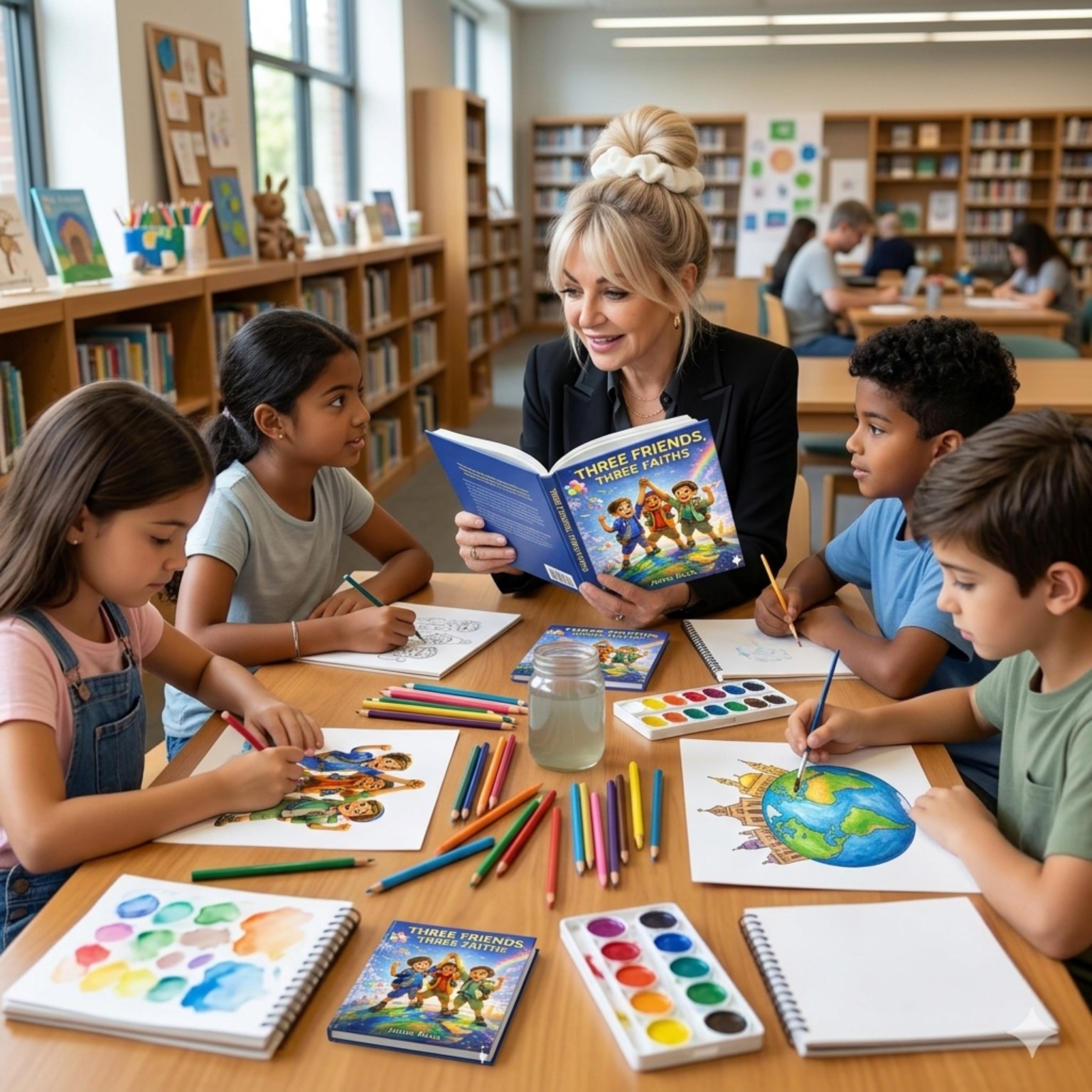
In classrooms, the problem is usually not children's inability to think.
The problem is adults' fear of the conversation itself.
Over time, I found that the right question changes the entire emotional atmosphere of a discussion.
Prompt One
“Why do you think people become angry at groups they do not know personally?”
This question changes discussion immediately.
Why?
Because it moves children away from slogans and toward curiosity.
Instead of:
“Who is bad?”
children begin asking:
“Why do fear and division happen?”
That shift matters enormously.
It teaches:
- empathy,
- critical thinking,
- emotional intelligence,
- and social awareness.
Children begin realizing that conflict rarely starts with simple evil.
It often begins with:
- fear,
- misunderstanding,
- identity,
- humiliation,
- and emotional manipulation.
That understanding creates maturity far earlier than adults usually expect.
Prompt Two
“Can someone believe something strongly and still treat other people kindly?”
This question helps children understand an important distinction:
Children begin recognizing:
- disagreement does not require hatred,
- identity does not require violence,
- and compassion is possible even between different worldviews.
This is especially important in a world where children increasingly encounter:
- online anger,
- political division,
- religious stereotypes,
- and social polarization.
Many adults unknowingly teach children:
“If someone thinks differently, they are dangerous.”
But healthy education teaches something else:
In divided societies, that lesson becomes incredibly important.
Prompt Three
“What makes people feel safe enough to talk honestly?”
This may be the most powerful question of all.
Because healthy education is not built on fear.
It is built on emotional safety.
When children feel:
- respected,
- listened to,
- emotionally secure,
- and free from humiliation,
they become more thoughtful, curious, and honest.
And honest conversations reduce fear far more effectively than silence ever does.
One of the greatest educational mistakes adults make is confusing control with trust.
Children do not think better because they are afraid.
Why these conversations matter
Children already encounter:
- conflict,
- social division,
- online anger,
- misinformation,
- fear,
- propaganda,
- and emotional polarization.
Education cannot prevent difficult realities from existing.
But it can teach children how to process them intelligently.
That may be one of the most important responsibilities modern education has.
The role of emotional safety in learning
Children learn best when they do not feel threatened.
Fear narrows thinking.
Emotional safety expands it.
A classroom where children feel safe enough to ask:
- difficult questions,
- uncomfortable questions,
- and emotional questions
becomes a classroom where real thinking begins.
This does not mean avoiding difficult subjects.
It means approaching them with:
- emotional intelligence,
- patience,
- curiosity,
- and humanity.
That approach changes not only discussions —
but relationships between children themselves.
Final thought
The goal is not to make children afraid of the world.
The goal is to help them understand it without losing empathy.
And sometimes an entire future begins with a classroom conversation where a child finally feels safe enough to think openly.